
Ontario Corn and Soybean Micronutrients Knowledge Hub
Welcome to the Ontario Corn and Soybean Micronutrients Knowledge Hub, a searchable collection of research and extension information relevant to micronutrient management for corn and soybean production in Ontario. Developed through a rigorous systematic mapping process, the Ontario Corn and Soybean Micronutrients Knowledge Hub holds 126 Ontario-relevant records published between 2010 and 2025, providing a curated collection of the latest scientific evidence most applicable to Ontario's corn and soybean sectors.
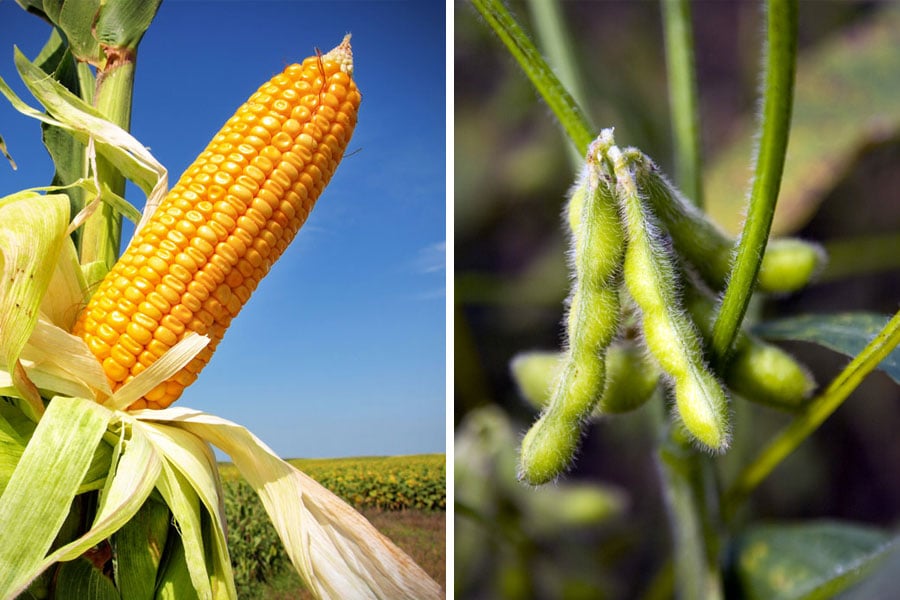
The Ontario Corn and Soybean Micronutrients Knowledge Hub includes a diverse range of sources, including peer-reviewed research articles, extension and advisory publications, handbooks, factsheets, and diagnostic and plant tissue testing resources, recognizing that important micronutrient management knowledge is generated through both scientific research and professional practice.
Only records determined to be relevant to Ontario production systems are included in the Ontario Corn and Soybean Micronutrients Knowledge Hub. Ontario relevance was assessed using predefined criteria based on continental glaciation history, similar climate and corn and soybean production systems.
The Ontario Corn and Soybean Micronutrients Knowledge Hub covers the nine micronutrients currently recognized as essential for corn and soybean production: boron, chlorine (chloride), cobalt, copper, iron, manganese, molybdenum, nickel, and zinc.
Each record included in the Ontario Corn and Soybean Micronutrients Knowledge Hub has been systematically coded using a standardized evidence extraction framework that captured study characteristics, geographic location, crop, micronutrient(s), intervention method, reported outcomes, document type, study type, and key findings. This standardized structure enables users to efficiently search, filter, and compare evidence across multiple dimensions while maintaining complete traceability to the original source documents.
The Ontario Corn and Soybean Micronutrients Knowledge Hub is intended to support researchers, agronomists, crop advisors, extension specialists, government agencies, commodity organizations, farmers, and policy makers seeking reliable, Ontario-relevant evidence. Users can rapidly locate information related to specific micronutrients, diagnostic approaches, critical soil and tissue testing considerations, micronutrient interactions, crop responses, application practices, and agronomic, economic, and environmental outcomes. By consolidating dispersed knowledge into a single searchable resource, the Ontario Corn and Soybean Micronutrients Knowledge Hub reduces the time required to identify relevant evidence while improving transparency and consistency in evidence-informed decision making.
Financial support provided by:

Collection

CDDP profiles and selected WRKY genes expression response to zinc dioxide nanoparticles foliar application in Glycine max L.
Background: Zinc is a vital trace element required by plants for numerous cellular activities. Application of nano-fertilizers in the form of Zn-O nanoparticles was evaluated in this study to describe the changes in CDDP fingerprints and selected WRKY genes expression in two Glycine max L. varieties. Methods: Foliar dispersions of ZnO nanoparticles were applied by handheld sprayer with the nanoparticle concentrations 1.4 mg L-1, 14 mg L-1 and 140 mg L-1 plus control plants. Four primer combinations of conserved parts of plant WRKY genes were used in CDDP fingerprinting and four WRKY genes were evaluated for their expression changes. Result: Polymorphic CDDP profiles were generated for three primer combination. No unique amplicons were obtained, but the generated fingerprint profiles differ in control plants of both varieties. The ability of used primer combinations to detect polymorphism was comparable only for combinations F1R2b and F1R3a. No significant changes of expression were obtained in the case of 1.4 mg L-1 foliar application of ZnO nanoparticles for WRKY11, WRKY106 and WRKY149 genes. The highest applied concentration of ZnO nanoparticles resulted in the relevant upregulation of all the analysed WRKY genes with the values from 5 times (Adelfia, WRKY 90) up to the 80 times (Mentor, WRKY 106).
Characterizing short and long term iron stress responses in iron deficiency tolerant and susceptible soybean (Glycine max L. Merr.)
Nutrient deficiencies limit growth and yield in many different crop species. The calcareous soils in the upper Midwestern United States favor the development of iron deficiency chlorosis (IDC) in soybean (Glycine max L. Merr.). Even minor symptoms result in end of season yield loss. To identify molecular pathways and networks underlying tolerance to iron deficiency stress in soybean, we leveraged two near isogenic lines (Clark and Isoclark) that differ in their tolerance to iron stress. Clark and Isoclark were grown in hydroponics in one of three treatments: iron sufficient media for ten days, iron deficient media for ten days, or iron sufficient media for eight days followed by transfer to iron deficient media for two days. Following phenotyping, plant tissues were harvested for RNA-seq analysis. To facilitate analyses, we clustered differentially expressed genes across genotypes and timepoints in both roots and leaves. With this experimental design, we could identify iron stress response differences between Clark and Isoclark, evaluate the impact of iron stress duration, and link expression clusters with discrete biological functions and the transcription factor families that regulate them. We identified thousands of differentially expressed genes associated with soybean stress tolerant responses including the cell cycle, gene silencing, iron acquisition, and defense. In Clark, the number of differentially expressed genes and magnitude of expression increased with increasing iron stress duration. In contrast, Isoclark decreased the number and magnitude of differentially expressed genes across time. Differences in gene expression corresponded to phenotypic differences. The shifting expression patterns between timepoints and tissues suggests novel mechanisms for iron stress signaling between source and sink tissues.
Changes in the uptake of Cu, Zn, Fe and Mn by dent maize in blue lupin/spring oat strip cropping system
Strip cropping is a form of intercropping used in both tropical and temperate climate zones. Maize is a species often grown in strip cropping, because it responds to the edge effect with a substantial increase in yield. In the experiment, strip cropping of maize with blue lupin and oat was compared to sole cropping of maize in the conditions of mechanical and chemical weed control. A field experiment was conducted in 2008-2010 at the Experimental Station in Zamość, University of Life Sciences in Lublin (50°42' N, 23°6' E). The study examined the effects of the cropping method and weed control methods on the content of copper (Cu), zinc (Zn), iron (Fe) and manganese (Mn) in maize biomass and their uptake by maize. The impact of the position of the row in the strip and of the adjacent plant species on the content and uptake of these micronutrients was analysed as well. Strip cropping significantly increased Zn and Fe content in maize biomass, reduced Mn content, and did not significantly affect the accumulation of Cu. In the strip cropping, interspecific facilitation between neighbouring plant species was also observed. Placement adjacent to the oat strip contributed to higher Cu content in the maize, while placement next to blue lupin increased the content of Fe and Zn. The highest Mn content was noted in maize grown in the centre row. The results indicate that appropriate selection of plant species for strip cropping can affect the chemical composition of the plants. This makes it possible to eliminate or mitigate mineral deficiencies in the plants.
Common fertilizers used in corn production
Chlorine can be applied with potassium chloride (0-0-60), which is 47% chloride, ammonium chloride (NH4Cl), calcium chloride (CaCl2), and magnesium chloride (MgCl2). In many situations, compound fertilizers are applied to soils.
Comparison of field management strategies for preventing iron deficiency chlorosis in soybean
Iron deficiency chlorosis (IDC) is a serious management issue for soybean [Glycine max (L.) Merr.] grown on calcareous soils. Strip trials were established on calcareous Mollisols to study the effects of Fe-ethylene diamine-N,N'-bis (hydroxy phenyl) acetic acid (EDDHA) in-furrow (IF-Fe) and of an oat (Avena sativa L.) companion crop on two soybean varieties either tolerant or susceptible to IDC. The severity of IDC varied from low to severe within sites. The susceptible variety produced the highest yield in the absence of IDC. In-furrow Fe increased the yield of a variety susceptible to IDC under moderate to severe IDC. The oat companion crop increased yield consistently for the susceptible variety under severe IDC and sometimes reduced yield when oat grew beyond 25 cm in height. The tolerant variety without IDC management produced yields similar to those of the susceptible variety with IF-Fe or an oat companion crop. Oat reduced trifoliate nitrate N and Fe concentration regardless of IDC severity. Trifoliate Fe concentration lowered with IF-Fe, but only when oat was not planted. Grain protein and oil concentration were affected by variety, but were not affected by IDC management. Soil test factors such as soil organic matter (SOM), pH, electrical conductivity (EC), or diethylene triamine phentaacetic acid Fe (Fe-DTPA) were poor predictors of the severity of IDC. Variety selection is the most important strategy for lessening the severity of IDC. In-furrow application of Fe-EDDHA provides a solution for mitigating moderate to severe IDC and provides less risk than an oat companion crop.
Comparing early transcriptomic responses of 18 soybean (Glycine max) genotypes to iron stress
Iron deficiency chlorosis (IDC) is an abiotic stress that negatively affects soybean (Glycine max [L.] Merr.) production. Much of our knowledge of IDC stress responses is derived from model plant species. Gene expression, quantitative trait loci (QTL) mapping, and genome-wide association studies (GWAS) performed in soybean suggest that stress response differences exist between model and crop species. Our current understanding of the molecular response to IDC in soybeans is largely derived from gene expression studies using near-isogenic lines differing in iron efficiency. To improve iron efficiency in soybeans and other crops, we need to expand gene expression studies to include the diversity present in germplasm collections. Therefore, we collected 216 purified RNA samples (18 genotypes, two tissue types [leaves and roots], two iron treatments [sufficient and deficient], three replicates) and used RNA sequencing to examine the expression differences of 18 diverse soybean genotypes in response to iron deficiency. We found a rapid response to iron deficiency across genotypes, most responding within 60 min of stress. There was little evidence of an overlap of specific differentially expressed genes, and comparisons of gene ontology terms and transcription factor families suggest the utilization of different pathways in the stress response. These initial findings suggest an untapped genetic potential within the soybean germplasm collection that could be used for the continued improvement of iron efficiency in soybean.
Comparing high- and low-input management on soybean yield and profitability in Michigan
Increased commodity prices, commercial marketing, and convenience have encouraged soybean [Glycine max (L.) Merr.] producers to adopt high-input management systems for maximum grain yield regardless of soil or plant tissue nutrient concentrations, soil physical properties, or disease pressure. A three site-year trial was established in Michigan to investigate soybean grain yield and profitability in response to commonly recommended inputs, including poultry litter (PL), potassium thiosulfate (KTS), foliar micronutrient, and fungicide applications across intensive (i.e., high-input) and traditional (i.e., low-input) management systems. Across all site-years, intensive management did not significantly increase soybean grain yield compared with traditional management. No single input applied significantly increased grain yield as suggested by an absence of visible nutrient deficiencies and minimal foliage disease in either growing season. In addition, traditional management significantly increased producer economic net return by an average of $203/acre. Potassium thiosulfate significantly decreased net return in one of three site-years while PL significantly decreased net return in all three site-years due to a lack of positive yield response and high individual input costs. Data suggest limited potential for intensive management systems to increase soybean grain yield and profitability without the presence of yield-limiting factors (e.g., disease pressure and nutrient deficiencies). Practitioners should consider site-specific soil properties and the likelihood of a grain yield response prior to broad-scale implementation of soil fertility and plant nutrition programs.
Content and uptake of microelements (Cu, Zn, Mn, Fe) by maize (Zea mays L.) and accompanying weeds
A field experiment was conducted in the years 2008 2010 at the Research Station of the Faculty of Agricultural Sciences, University of Life Sciences in Lublin, on brown soil with slightly acidic pH and average abundance of copper, zinc, manganese, and iron. The experiment was set up in a randomized split-plot design with four replications, with two methods for controlling weed infestation: I. mechanical - weeding of inter-rows twice; II. chemical - the herbicide Afalon Dyspersyjny 450 SC, directly after sowing (a.i. linuron, 900 g x ha(-1)).Next, the copper, zinc, manganese and iron content were determined in the maize and dominant weed species. Nutrient uptake from an area of 1 ha and the species specificity coefficient (SSC) were also calculated. All the weed species examined contained more copper in their biomass than maize, but their percentage share in total uptake was small, on average 1.7%. The content of zinc in maize biomass and in the segetal species was similar, except for Cirsium arvense L. which accumulated considerably less zinc than maize as well as the other weed species. The percentage share of weeds in zinc uptake was only 1.4 % of total uptake of this nutrient by the maize crop. Competitiveness of weeds in the accumulation of manganese and iron showed high species specificity. Chenopodium album L. and Galinsoga parviflora Cav, were the most competitive in accumulating manganese, while Cirsium arvense L. showed high ability to accumulate iron, considerably much higher than maize and other weeds species. The share of weeds in total manganese uptake was relatively large, on average 7.2% for the experiment.
Comparison of the effectiveness of applications of mineral fertilisers and digestate from a biogas station on yields, content of dry matter and micronutrients in the aboveground biomass of maize (Zea mays L.)
In a one-year vegetation pot experiment we compared the effect of digestate from a biogas station and mineral fertilisers on yields of the total aboveground biomass and content of selected microelements: zinc (Zn), manganese (Mn), copper (Cu), iron (Fe) of silage maize, 'Atletico' variety. Five treatments were used in the trial: 1) untreated control, 2) urea, 3) digestate during vegetation, 4) urea, triple superphosphate, KCl, MgSO4, 5) digestate before sowing. The nitrogen (N) rate was the same in treatments 2-5, 3.0 g N to pot. In treatment 4 the phosphorus (P), potassium (K) and magnesium (Mg) rates corresponded to those supplied in the digestate treatments (3 and 5). The dry matter weight of the total above ground biomass of one harvested plant (g) in treatments 1-5 was respectively as follows: 8.9 a; 27.1 c; 22.6 b; 33.0 d; 26.4 c (different letters indicate significant differences among treatments). The dry matter content of the aboveground biomass (%) for the respective treatments was as follows: 23.8 b; 24.7 b; 22.8 a; 22.7 a; 24.1 b. The content of micronutrients in the aboveground biomass fluctuated irregularly; however it was higher in all the fertilised treatments than in the control. It is true that the digestate (based on the date of application) yields were lower than the mineral fertiliser NPKMg (4) treatment; nonetheless applying digestates saves financial costs for the purchase of mineral fertilisers.
Content of minerals in soybean seeds as influenced by farming system, variety and row spacing
Soybean is a important source of protein and fat in the food and animal feed industries. Moreover, soybean also contains many other compounds, including minerals, which are beneficial for health and reduce the risk of many diseases. This study was conducted at the Czes-awice Experimental Farm near Lublin (51°18'23\" N, 22°16'02\" E) in 2016. The soil on which the experiment was set up belongs to typical Luvisols. It was characterized by high phosphorus and potassium availability as well as very high magnesium availability. The aim of the present study was to determine the effect of cultivation (organic and conventional system) and row spacing (22.5 cm and 35 cm) on the level of minerals in seeds of two soybean varieties: Aldana and Merlin. The study was conducted using a split-plot design, in three replicates. Seeds were sown on May 5, whereas harvest was carried out on September 5, 2016. After seeds were harvested, the content of the following major minerals was determined in them: phosphorus, potassium, magnesium, calcium, molybdenum, manganese, copper and nickel. Variety Aldana seeds were characterized by a significantly higher content of potassium and copper, while in var. Merlin seeds the calcium concentration was higher. The contents of phosphorus, potassium, calcium, copper and nickel were found to be significantly higher in conventional system grown soybean seeds. Seeds of soybean grown at a row spacing of 22.5 cm contained more copper and nickel. Row spacing was not found to significantly affect the macronutrient content in the studied material.


